Search This Blog

Tuesday, June 23, 2015

Garden Tour: Barnsley House


Visiting Barnsley House in the U.K. is very much like taking a step back in time. Tucked in the Cotswolds and built out of the warm colored stone of the same name, Barnsley House was constructed in 1697. Today it’s most famous in horticultural circles for the gardens David Verey, an architectural historian, and his wife, Rosemary Verey, an internationally known garden designer, created.
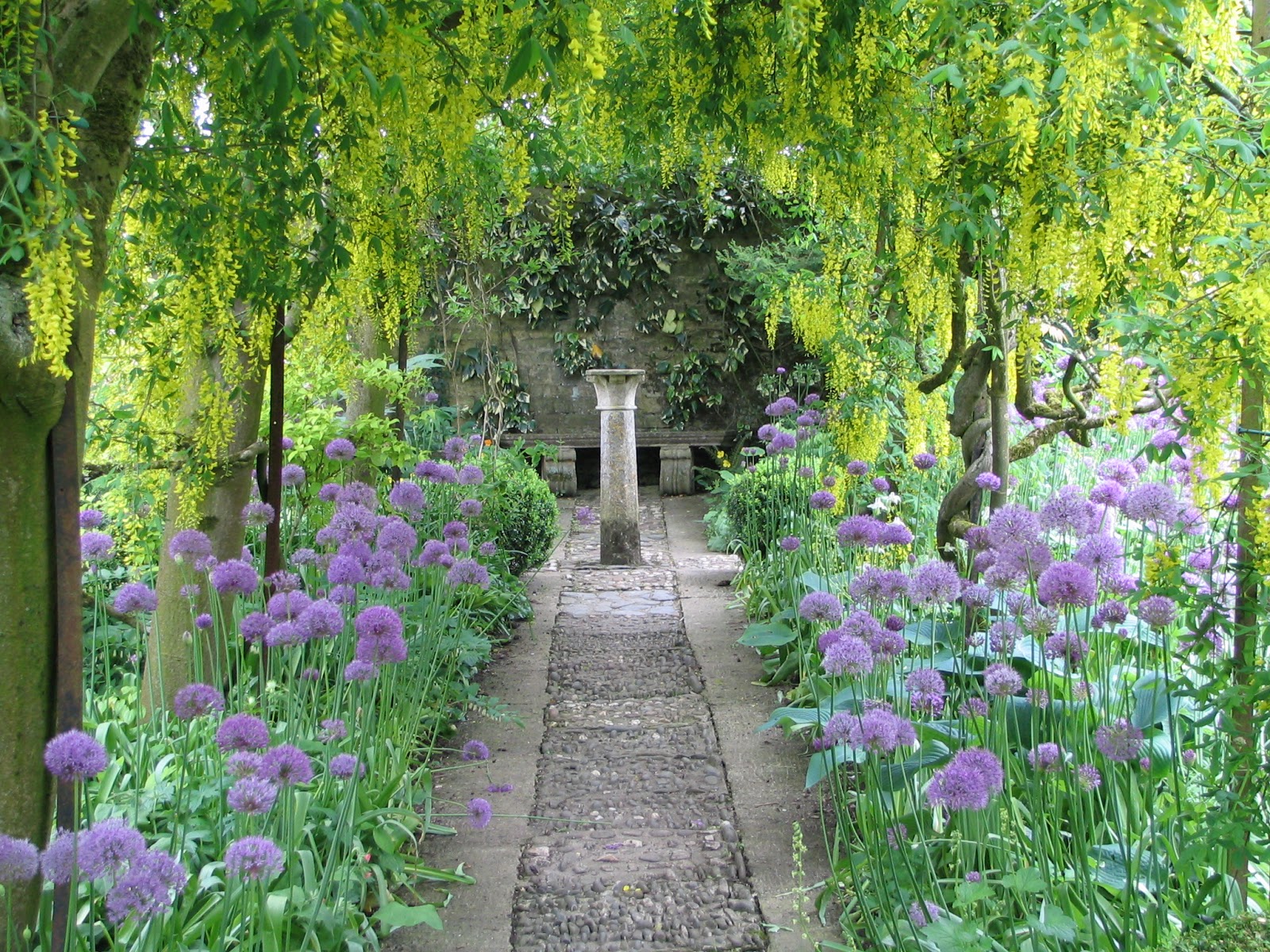
The ‘Laburnum Walk’, pictured above, has become an iconic symbol of English garden design and has been pictured and imitated in countless books, magazines, and gardens. The walk is a tunnel of Laburnum trees trained around metal arches. Their soft, yellow, pendulous racemes pleasantly modify the quality of the light penetrating the leaf canopy and the lavender Allium umbels standing at attention on each side of the walk are a soothing compliment. Famous as it is, the walk is sadly only in bloom for about a fortnight every year during the month of May. Of late, the walk has undergone a rejuvenation: everything has been taken out and replanted with new trees to begin again. It will be some time before the walk takes on the look you see above.

A knot garden
Since Rosemary Verey’s death in 2001, the property has changed hands several times until finally becoming an upscale hotel and restaurant. There are 3 ways to visit the garden: Purchase a membership, make reservations at the restaurant, or stay as a guest in the hotel. We opted to try the restaurant and were not at all disappointed! The menu is creative and the dishes well-executed. The kitchen takes advantage of the well-tended vegetable garden near the house incorporating seasonal produce into the menu.

The kitchen garden bordered with miniature box hedges
Part of Barnsley’s charm is its scale: intimate spaces and narrow paths give one a sense of quiet peace, none of it is intimidating, all of it is inviting. It feels much like a garden a gardener can aspire to having at home and so many design aspects can be equally well applied to contemporary gardens. I’ll leave you with a series of images, all of them inviting you to experience Barnsley House first hand. 

Standing outside the famous Laburnum tunnel before it was replanted


Rhubarb and the rhubarb forcing jars so popular in English gardens but all but impossible to find in the U.S.

Scottish Highland Cattle living south of their natural range!

The famous Handkerchief tree, Davidia involucrata 

Sunday, June 21, 2015

Book Review: Goat Song by Brad Kessler


Brad Kessler’s book isn’t a how-to manual on raising dairy goats, rather it’s a meditation upon a life lived alongside these noble yet much maligned creatures (i.e. goats do not chew on cans). Mr. Kessler brings the reader on a journey which begins in Manhattan and ends on a sprawling farm in rural Vermont:


“This is the story of our first years with dairy goats. A story about what it’s like to live with animals who directly feed you. I tell of cheese and culture and agriculture, but also of the rediscovery of a pastoral life. Rediscovery because the longer I lived with goats the more connections I saw to a collective human past we’ve since forgotten, her in North America at least.”

Kessler’s book touches on all aspects of goatherding, even a short history of the interaction between people and goats around the world and through the ages. He brings us along as his first goat is serviced by a buck–an experience more rattling for Kessler and his wife than for the doe! He describes the first kids born on the farm and then the battle to extract milk from the udders. Cheese is finally made and along the way we learn much more than the day-in, day-out routines of the farm but learn something of ourselves as well. 
Kessler’s writing is lyrical and many times poetic and it wouldn’t surprise me if, like Kessler, upon seeing what was to become his farm, some of you become just as sure as he did that goats might have a place in your lives too:


“We drove there late one October afternoon when the trees had shed their leaves. The valley looked promising; narrow and forested with folded hills. An opalescent river tumbled aside the road. The pavement turned to gravel, then we jostled up a rocky drive and the house swung into view: bone white clapboards, mountains all around. We both knew right away.”

Saturday, June 20, 2015

Garlic Scape Pesto!

Garlic Scapes

I'm re-posting this for 2015, around only once a year, garlic scapes are great in pesto:

June is the month for garlic scapes, the flowering stalk and immature flower head of the garlic plant. Garlic scapes taste very much like garlic cloves but are a little less intense. 

Following is a recipe for garlic scape pesto adapted from epicurious.com  from Ian Knauer's book The Farm :

This recipe makes about 1 1/2 cups of pesto which can be mixed into pasta, rice, quinoa or spread on little toasts or crackers. Of course, you can also eat it with a spoon like I do!

Needed:
10 garlic scapes
1/3 cup unsalted pistachios (you can use any nut/seed here, we used sunflower seeds)
1/3 cup finely grated Parmigiano-Reggiano
Salt and Pepper to taste
1/3 cup extra-virgin olive oil

Reserve the oil, salt and pepper. Puree all the other ingredients in a food processor or blender (it helps to chop the scapes before putting them in). With the motor running, slowly begin pouring the oil through the opening and continue until you've poured in all the oil. The mixture will be fairly thick when you're finished. Salt and pepper to taste. The pesto will keep for a week in the fridge or frozen for a month.

To use, prepare a batch of pasta, rice, quinoa etc. and mix the pesto in to taste. Alternatively it can be used as a spread. Delicious!

Tuesday, February 17, 2015

Garden Tour: Hidcote Manor Garden

Hidcote Manor Garden in Gloucestershire is the creation of Major Lawrence Johnston. The son of wealthy American stockbrokers, he was born in Paris in 1871, educated at home and later at Cambridge before becoming a naturalized British subject in 1900. Johnston’s mother bought the 300 acre estate in 1907 and he soon began planning the gardens, a labor of love he continued for the next 40 years. Eventually Johnston bequeathed the house and garden to the National Trust.
The garden at Hidcote is best described as Arts and Crafts in style and remains the most influential of its kind to this day. The garden is laid out in a series of outdoor garden rooms and though the garden itself is very large, each individual room feels intimate and meticulously planned. Johnston was exacting not only in his plant selections and design but also in his planting combinations.
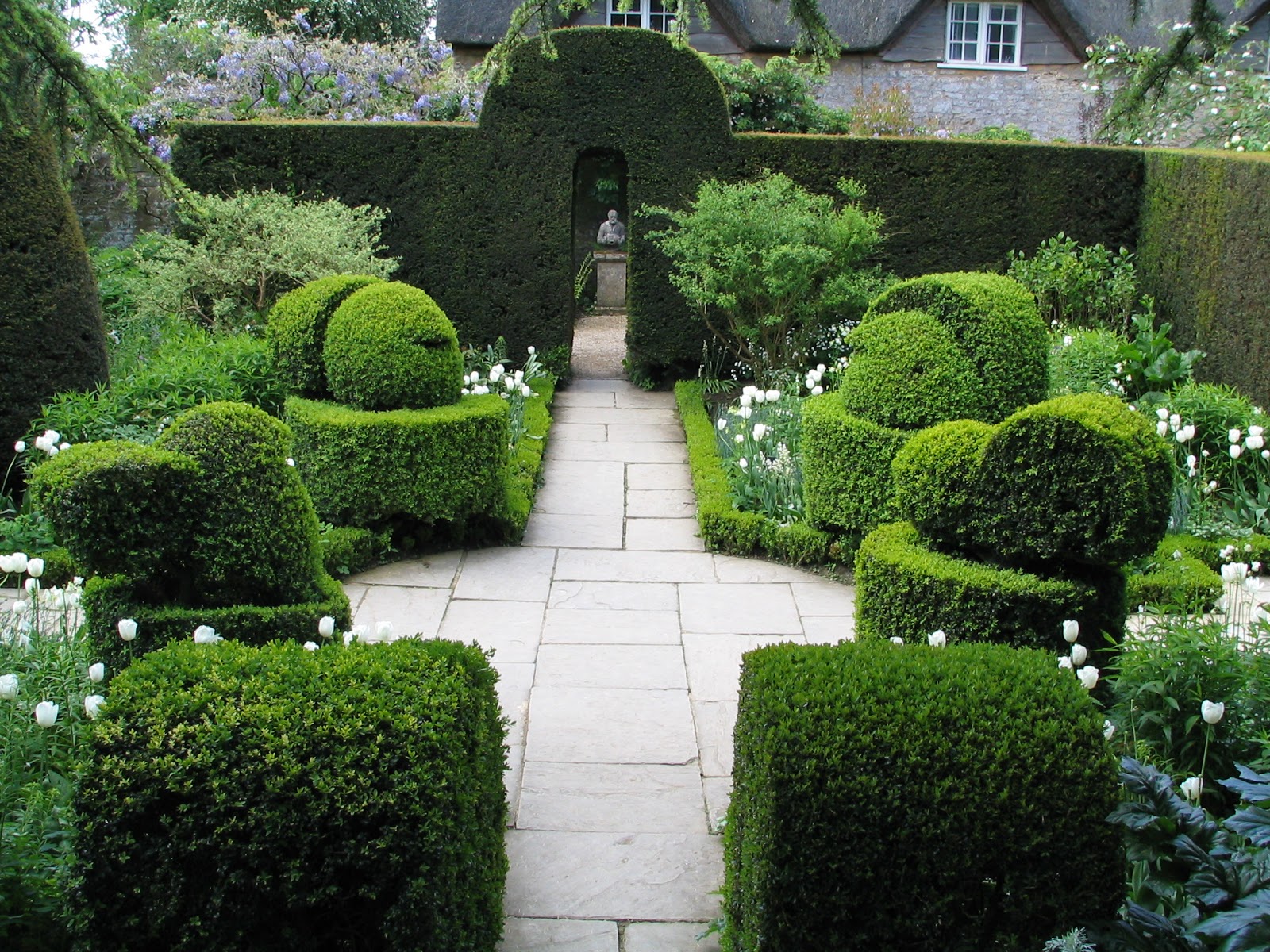
As one makes their way around the garden, the use of hedges and topiary is soon apparent. Johnston makes liberal use of these as a defining element throughout. They’re used to divide, combine, lead the eye and add a sense of beauty and whimsy.
Throughout Johnston’s life, he was an avid plant collector traveling the world-over in search of the new and novel as well as sponsoring individual plant hunters to do the same. Several now famous plants are attributed to him and bear the Hidcote name: the narrow-leaved lavender Lavandula angustifolia ‘Hidcote, Penstemon ‘Hidcote Pink, Hypericum ‘Hidcote Gold’. 
Though images of symmetry and order are conjured up when thinking of the garden, the image below shows that there areas tucked in here and there which are more whimsical.
In certain spaces, Johnston delights the eye by combining hedges, topiaries, box parterres, intriguing vistas and herbaceous plants. Johnston also uses changes in level to create a further sense of movement. Many of the rooms require walking up or down several steps further adding to the anticipation of what lies beyond. Because of Johnston’s liberal use of yew, box, beech and hornbeam, the garden is beautiful any time of the year. If you’re interested in seeing the herbaceous plants at their best, a visit at the end of May through June is best.

Monday, February 2, 2015

Clivia: The Perfect Houseplant

We’re just about to hit peak flowering season for a spectacular group of plants: Clivia miniata. Hailing all the way from South Africa, they make beautiful and indestructible houseplants. Clivias can be grown outside in frost-free areas and are often featured in landscape design. Denizens of the shade, they also thrive indoors where their dark green strap-like foliage and brightly flowered umbels will brighten your home just when you need it most–at the end of winter.
Plant breeders introduce plants with new leaf shapes and coloring every year. Clivia flowers were originally all orange but persistence has paid off, pastels, yellows, peaches, and near-white flowers can be found through specialty growers.
If you’re intrigued by Clivias, the North American Clivia Society is a good place to start. The North American Clivia Society Show and Symposium will be held this year at Longwood Gardens March 14-15. This will be followed by North American Clivia Society Clivia Show and Sale held at the Huntington Library and Botanical Gardens March 21-22. 

Tuesday, January 27, 2015

Save Time, Check Seeds First

If you start vegetable and flower seeds indoors like I do, then you probably have quite a few old seed packets tucked away from previous years. Rather than throwing them out and buying new ones, I have a trick that will save you both time and money. Try germinating seeds from those old seed packets prior to planting up an entire tray. This method will give you a germination percentage and you can use that knowledge to either throw the packet out if nothing sprouts or you can over seed each cell in the tray to give you a more even germination rate. Here’s what to do:
First, take out all the old seed packets you want to plant seed from this year and write the type and variety on a slip of paper–I like post-it notes for this. Count 10 seeds for each variety and place the seeds on a small paper towel square. In my example you’ll notice I’ve only counted out 5 Mangel seeds. That’s because Mangels are a type of beet and the seed is technically a fruit containing multiple seeds, so testing 5 fruits gives me more than 10 seeds. Why 10? It’s easy to calculate your germination percentage. If only 1 out of 10 germinates, that’s 10% germination and you should throw out the packet. If 5 germinate, you’ve got 50% and you can use that knowledge to put 2 seeds in each seed cell should you decide to keep the seeds.
Fold each paper towel square and moisten with water, then place each folded square into a plastic bag with the label facing out. Place the sealed baggies in a warm location, like the top of your refrigerator. Mark your calendar–or the slips of paper–with the date you started and the expected germination date for each seed variety using the seed packet information as a guide. Check back in the recommended number of days, count the germinated seeds and decided whether you’re better tossing them in the bin and starting over or getting right down to business and planting them up for good. You need not waste the germinated seeds, if you’re going to start planting right away, you can put the germinated seeds in a pot with soil and let them continue growing. Good luck!

Sunday, January 18, 2015

Garden Tour: RHS Wisley


Several years ago my partner and I went on holiday to England. Our goal was to visit as many of the gardens that had inspired us in our own gardening. For sure we were beating down the well-worn tourist trail, but the gardens we visited have become iconic for very good reason. As winter trudges on and daylight hours begin to increase minute-by-minute, I find myself revisiting these gardens, looking to them for inspiration I’ll apply to my garden this spring. Over the next few posts I’d like to share some of the gardens that continue to inspire me--especially when it's cold, grey, and wet outside! 
I’ll begin with RHS Wisley, the flagship–and longest held–garden of the Royal Horticultural Society (RHS). Gifted to the RHS in 1903, Wisley is located in Surrey, England and serves as one of the exhibition and research gardens of the RHS. The RHS is probably the premiere horticultural research, education and preservation organization in the world. It publishes a monthly magazine, The Garden, dedicated to everything gardening, operates and maintains four exquisite gardens, puts on (among many others) the coveted and much publicized RHS Chelsea Flower Show. For many gardening enthusiasts, visiting Wisley is something of a pilgrimage. 
Many of the ornamental plants we grow in our own gardens had their coming out parties in Wisley’s trial garden plots. Every year, plant breeders send seeds from new varieties they hope to introduce to the public to Wisley. Wisley grows these plants on, and by the end of the season, decides whether or not to give them their stamp of approval. When visiting, it’s always a treat to see what’s on trial and to see firsthand how the varieties compare with one another.
Wisley houses a series of ‘model gardens’, to showcase different gardening styles on a scale the average homeowner could execute in their own yard. The model gardens are interconnected and vary in style from traditional to modern, monochromatic to riotous color. 
The alpine house is reserved for those plants which naturally grow in more extreme conditions or are so small that they need to be grown in a location that can do them justice. Just outside the Alpine house is one of my favorite features: a blooming wall. Stone walls are ubiquitous in Europe, but in the US, they are more of a luxury and to my eyes, a stone wall bursting with plants and color is the greatest luxury of all.
Rhododendron and Azalea enthusiasts will find much to marvel at if they plan their trip in May.
All around Wisley, topiary abounds. Most often in the form of hedges delineating and framing spaces, visitors also come across more extravagant examples, like the Hornbeam arch pictured below.
The gardens at Wisley are constantly being evaluated and evolving. The apple orchard is particularly impressive. If visiting in the fall, the garden holds tastings of their apple collection. A working vineyard exists where bottles of Wisley wine are put into the cellar every year. Almost one million visitors make their way to Wisley each year, aren’t you curious?